Citi : Betting Big On Argentina
Argentina is re-entering the global financial conversation, and Federico Elewaut believes Citi is positioned to play a defining role in that return.
As Head of Argentina & Banking Head of Argentina, Paraguay and Uruguay, Elewaut sits at the intersection of the country's domestic economy and the international financial system. His perspective is shaped by more than three decades at Citi, including leadership experience in Argentina and Perú, and by a career that has spanned multiple countries and periods of expansion, crisis, stabilization and renewed investor interest.
That institutional memory gives him a clear view of the current moment. In Elewaut's assessment, Argentina is not simply experiencing another temporary improvement in sentiment. The country is approaching a more credible inflection point, supported by a reopening of capital markets, growing investment in energy and mining, and renewed engagement from international companies and investors.
"When an international company is evaluating an investment in Argentina, Citi can provide access to a global network of payments, liquidity, trade finance, foreign exchange, custody and corporate banking capabilities."
Citi's response has been decisive. The bank is strengthening its senior leadership, expanding its focus on institutional clients and positioning its global platform around the opportunities emerging in payments, treasury services, corporate banking, project finance and capital markets.
"We have moved from risk management to opportunity capturing," Elewaut says, describing a strategic shift that reflects both Argentina's changing trajectory and Citi's confidence in the market.
BUILDING THE LEADERSHIP PLATFORM FOR GROWTH
That confidence is visible in two senior appointments announced in the same week.
Tomás Videla was named Head of Services for Argentina and the South Sub-Cluster, covering Argentina, Paraguay & Uruguay. Germán Heberling was appointed Head of Corporate Banking.
For Elewaut, the timing was deliberate. The two appointments reinforce the principal pillars of Citi's institutional franchise and align the local organization with the bank's broader global strategy.
Videla will lead the platforms that support payments, treasury, working capital and foreign trade. These services are essential to multinational companies operating across borders and to Argentine businesses seeking to integrate more deeply into international supply chains.
Heberling brings more than 25 years of Citi experience, including roles in New York, London and Panama, as well as service as Citi Country Officer for Paraguay. His responsibilities include local corporate clients, financial institutions, the public sector and Citi's Global Network Banking (GNB) operations.
Elewaut sees the two businesses as fundamentally interconnected.
The Corporate Banking business provides financing, advisory services and access to international capital. Services gives clients the infrastructure to manage liquidity, move money, finance trade and operate across jurisdictions. As Argentina becomes more integrated with global commerce and capital markets, demand for both capabilities should rise together.
"The strategic logic is simple," Elewaut says. "Argentina is at an inflection point, and we want our best people here."
The return of Argentine companies to international financing markets is one indication of that change. Transactions involving major companies such as YPF have helped reopen access to new corporate capital after a period of limited international issuance.
Elewaut views those transactions not as isolated events, but as early signs of a broader reopening. If macroeconomic progress continues, he expects both sovereign and corporate issuers to regain more sustained access to global investors.
That would create a significantly larger role for Citi in underwriting, structuring, distribution and advisory work.
CONFIDENCE GROUNDED IN INSTITUTIONAL MEMORY
Elewaut joined Citi in 1990. His confidence in Argentina's prospects is therefore grounded in experience rather than short-term market enthusiasm. Having led through repeated Argentine cycles, he places particular value on institutional memory. It allows executives to identify patterns, separate structural improvement from temporary stabilization and assess whether changes are likely to endure.
"You are no longer surprised by things that might surprise others," he says.
That experience also shapes Citi's relationships with its clients. The bank has maintained an uninterrupted presence in Argentina for more than 110 years, one of its longest-standing operations outside the United States. It serves close to 1,500 of the country's leading companies across manufacturing, financial services, trade, agriculture and energy.
Many of those relationships have lasted for decades.
Elewaut argues that continuity is especially valuable in markets defined by volatility. Clients know Citi will remain engaged during difficult periods, not only when capital is abundant and economic conditions are favorable.
That trust strengthens the bank's position as companies prepare for expansion. Citi can combine local knowledge with international execution, helping an Argentine company access foreign investors or supporting a multinational group entering or expanding in the country.
More for you
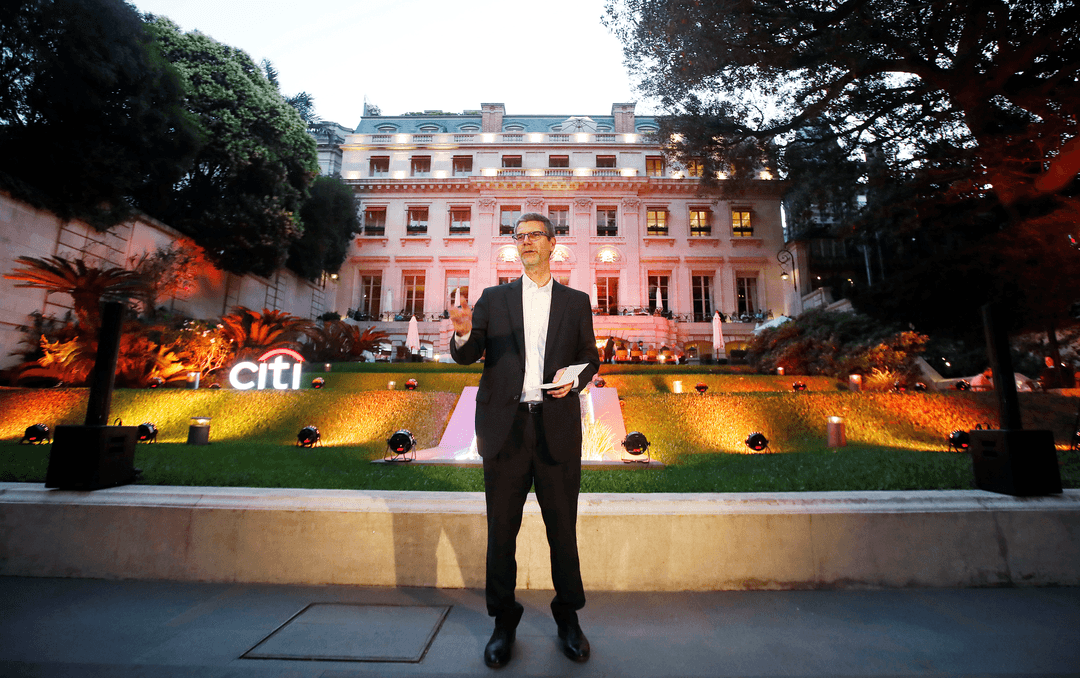
Elewaut believes the present recovery is more credible than previous periods of optimism he has observed. He is also clear that investors remain disciplined.
International investors are paying close attention to three areas.
The first is the continued accumulation of foreign currency reserves. A durable normalization process requires sustained reserve growth rather than a temporary improvement.
The second is the remaining system of capital and currency controls. Although conditions have evolved, restrictions continue to create barriers for some international investors and companies.
The third is the uneven nature of the economic recovery.
Energy and mining are already demonstrating significant strength. Vaca Muerta has emerged as one of Argentina's most important investment assets, while the pipeline of energy, mining and infrastructure projects is the most active Elewaut has seen in years.
The next stage must involve broader participation.
Construction, manufacturing and other productive sectors will need to generate stronger growth for the recovery to become fully established. Elewaut's confidence is therefore not based on the idea that Argentina has eliminated risk. It rests on the view that the country now has a credible path toward broader, more sustainable expansion.
CONNECTING ARGENTINA WITH GLOBAL CAPITAL
Citi Argentina's relationship with the bank's global leadership has become increasingly visible as the country returns to the international agenda.
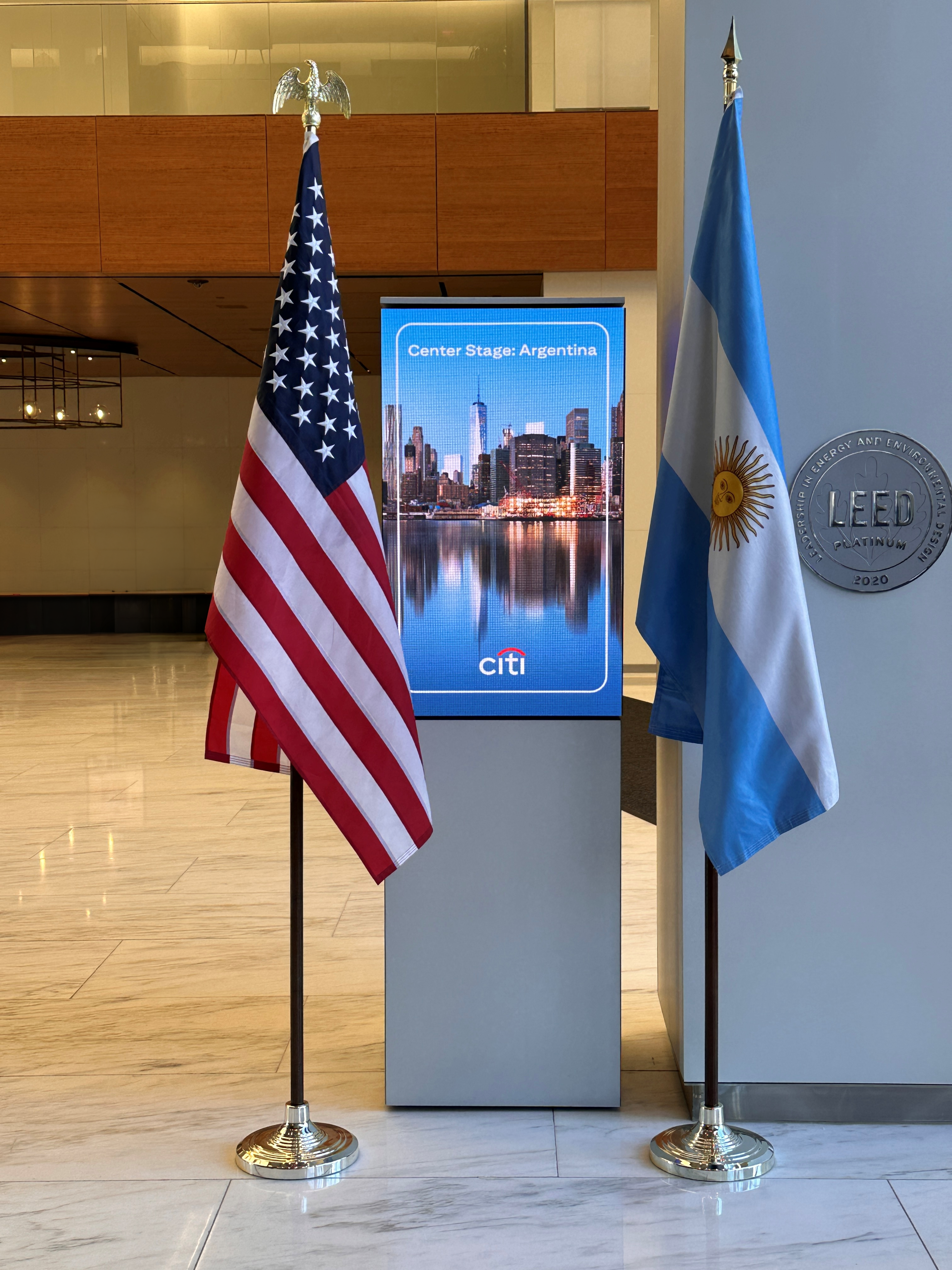
Citi CEO Jane Fraser hosted President Javier Milei at Citi Haus in Davos, while the bank supported Argentina Week in New York as a strategic partner. Elewaut sees those engagements as important signals to the global financial community.
They demonstrated that Citi continues to support Argentina's growth and development, while also presenting the country as a serious destination for investment.
For the local franchise, that support has practical consequences.
When an international company is evaluating an investment in Argentina, Citi can provide access to a global network of payments, liquidity, trade finance, foreign exchange, custody and corporate banking capabilities.
When an Argentine company wants to raise capital internationally, Citi can connect local expertise with global investors, markets and financing structures. That ability to operate in both directions is central to Elewaut's strategy.
He does not view Services and Corporate Banking as competing growth opportunities. The greater value comes from deploying them together.
As multinational companies expand their footprint in Argentina, they require more sophisticated cash management, cross-border payments, liquidity and working capital solutions. At the same time, large-scale investments in energy, mining and infrastructure require project financing, international lenders and capital markets expertise.
Each major project creates activity across the franchise. An energy development may begin with advisory work or financing. It then produces foreign exchange requirements, supplier payments, liquidity flows, trade finance and treasury activity. The Corporate Bank creates opportunities for Services, while Services deepens the broader client relationship.
Real-time payments provide another significant opportunity. Argentina is projected to generate a substantial economic impact from real-time payment adoption by 2028, reflecting both the scale of the domestic market and the potential for more efficient transaction infrastructure. [1]
For Elewaut, that development reinforces the strategic importance of Citi's Services platform as the economy becomes more digital, connected and internationally integrated.
Based on observations and past experience, looking three years ahead, Elewaut expects Citi Argentina to emerge as a stronger full-service institutional bank. And if these conditions continue, he sees great possibilities for a deeper capital markets franchise, a sustained pipeline of sovereign and corporate issuance and a larger role in financing the next generation of energy and mining projects.
Citi's competitive advantage will remain its ability to combine international financing capacity with more than a century of local presence.
Argentina's history gives investors legitimate reasons for caution. Elewaut does not dismiss those concerns. His argument is that the country's trajectory has changed enough to justify a different strategic posture.
Citi is no longer preparing only for volatility. It is preparing for growth. For Elewaut, the opportunity is to connect Argentina's strongest companies and projects with the international capital, infrastructure and expertise required to scale them.
After navigating more than three decades of Argentine economic cycles, his conclusion is clear: this moment is more credible, the pipeline is stronger and the country's return to global markets seems promising.