ARCH : Precision Architects
Fifteen years ago, Eli Crotzer looked at America's manufacturing landscape and saw not a sector in decline, but a puzzle waiting to be solved. Today, ARCH Global Precision stands as proof of that instinct.
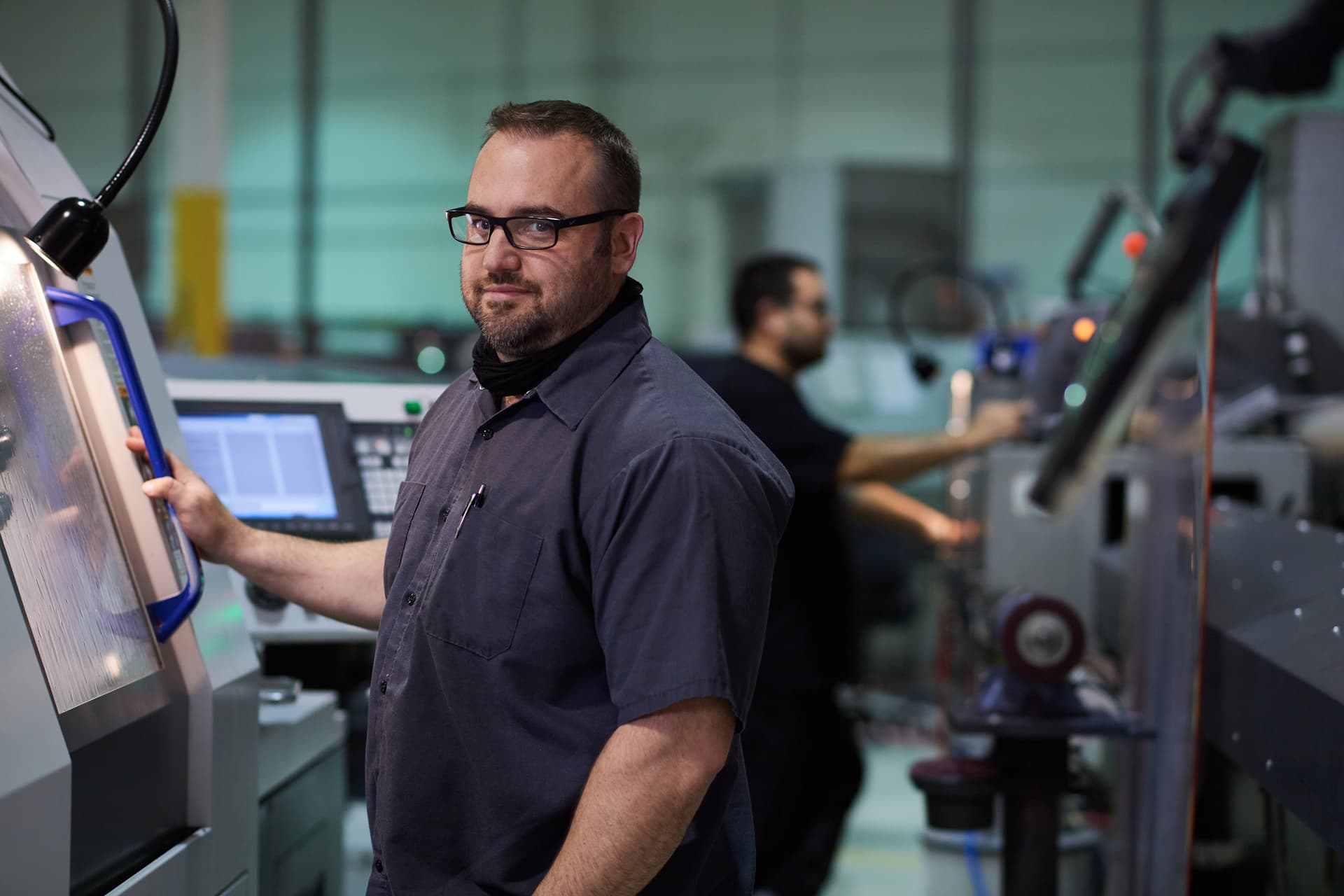
Walk the floor of any ARCH Global Precision manufacturing plant and you will notice something that does not announce itself: the near-silence of extreme exactitude. The machines are producing parts measured in fractions of a human hair: components destined for orthopedic implants, space exploration, autonomous vehicles, semiconductor equipment, and defense systems. Nothing about it is accidental. That level of precision is, in many ways, a mirror of the man who built the company.
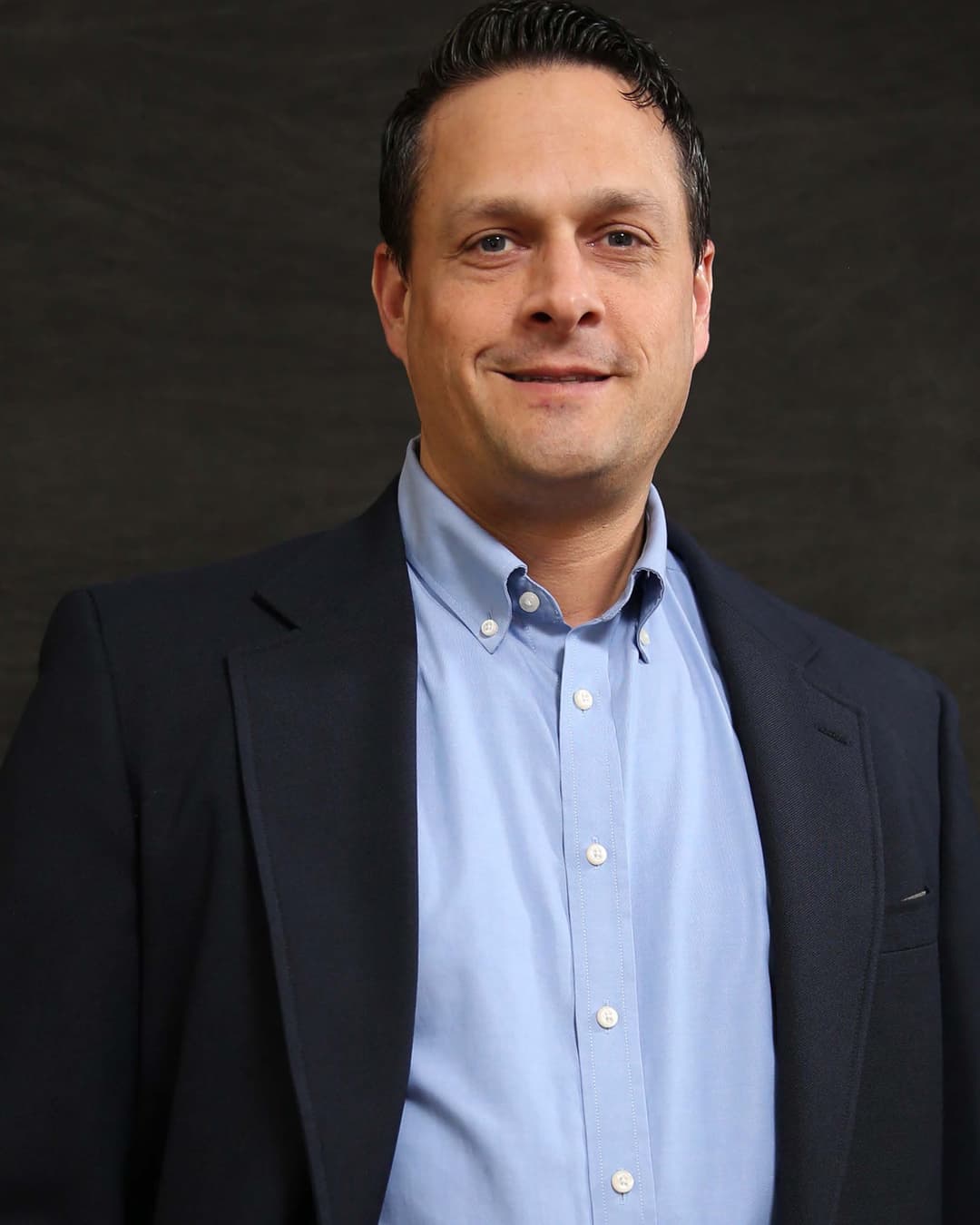
Eli Crotzer, who co-founded ARCH Global Precision with Strength Capital Partners and has served as its CEO for fifteen years, has spent his career doing something most people in manufacturing considered too complicated to bother with: taking a deeply fragmented industry and pulling it together. "There were approximately 20,000 machine shops in the U.S.," he recalls. "Everything from garage operations with three or four people to much larger enterprises. That fragmentation struck me as a compelling opportunity."
“"We're looking for profitable businesses where ownership has reinvested in the equipment and the workforce" - Eli Crotzer”
The result is a company that has completed more than 50 acquisitions across roughly 14 years, built out two distinct business segments in medical solutions and cutting tools, and forged a culture unified under what the company calls its "One ARCH" philosophy. It has also earned Crotzer an induction into the Detroit Deal Makers Hall of Fame, recognition he was quick to share with his CFO, chief human resources officer, and the broader team he credits for ARCH's M&A track record.
THE ART OF THE DEAL
Crotzer is careful not to reduce his company's acquisition strategy to a formula. "It's not a one-size-fits-all approach," he says. The common thread, however, is the health of the businesses being acquired. ARCH Global Precision is not in the business of turnarounds. "We're looking for profitable businesses where ownership has reinvested in the equipment and the workforce," he explains. Beyond that baseline, each deal is assessed on its own terms.
The recent acquisition of Kiss Technologies is a useful illustration of how Crotzer thinks. Kiss was already a customer of American Prosthetic Components ("APC"), a business ARCH Global Precision had acquired previously, and was selling highly complementary products into the exact same customer base. The logic was immediate. "It was a natural, highly complementary acquisition," Crotzer says. In that case, ARCH chose to consolidate Kiss into its APC operation, an exception to its general rule of preserving acquired businesses as standalone entities.
That general rule reflects something Crotzer holds firmly: every business has what he calls a secret sauce, and identifying and protecting it during onboarding is non-negotiable. "There's always some sort of recipe," he says. "Preserving that is important." What follows is a deliberate, unhurried integration, with HR teams spending the first week or two on-site, benefits transferred carefully, and branding transitioned over months or even years. "We don't want to just do things to check a box," he says. "We ask: is there compelling value here? If the answer is no, and it's just going to create animosity with the workforce, we're probably not going to do it."
RIDING THE RECOVERY
The timing of this conversation matters. American manufacturing has just emerged from one of its more painful recent contractions. The ISM Purchasing Managers Index, the bellwether Crotzer monitors closely, spent roughly 30 months below the 50-point threshold that separates expansion from contraction. "One of the more prolonged manufacturing recessions I've encountered in my entire career," he says. ARCH was not insulated from it. The company went through reorganizations and downsizing. It was, in his words, "a pretty painful period."
The pivot came around eight months ago. Demand began lifting across the majority of the company's customer base, not uniformly, but unmistakably. The Gardner Business Metalworking Index, which Crotzer considers an even sharper proxy for his specific market, followed almost the identical trajectory and has now broken back above 50. "We're clearly at the very front end of what I hope is a long, sustaining expansion," he says.
He attributes the recovery to a confluence of forces. Government policy and tariffs appear to be compelling companies to onshore and reshore production. Supply chain vulnerabilities exposed during COVID have not been forgotten. And technological advancement is steadily improving the cost competitiveness of American manufacturing relative to global alternatives. For ARCH Global Precision, the most immediate beneficiaries of all of this are aerospace, defense, and space exploration, three markets Crotzer identifies as the company's biggest near-term opportunity, each carrying its own structural tailwinds, and all requiring the kind of high-complexity, tight-tolerance machining that ARCH has spent 15 years becoming very good at.
AUTOMATION, AI, AND THE ARMS RACE
Crotzer does not romanticize the shop floor. He is a pragmatist about technology, and he is candid about where his company could have moved faster. "I wish we had jumped on automation a little sooner than we did," he admits.
The challenge, he explains, is that automation in precision manufacturing is not a single problem. Modern machine tools can be purchased with pallet pools that run overnight unattended, with automation baked in at the point of acquisition. Retrofitting older equipment is another matter entirely, requiring outside integrators and creative engineering, with payback timelines that are harder to justify in high-mix, low-volume environments like many of ARCH's plants. "You can still do it," Crotzer says. "It just takes some creative thinking to find an optimal solution."
More for you
"We're looking for profitable businesses where ownership has reinvested in the equipment and the workforce"
On artificial intelligence, the company has moved deliberately. Two months ago, ARCH assembled a cross-functional AI committee to assess applications across both its administrative and manufacturing operations, with an explicit focus on risk management alongside opportunity. The company also has access to a dedicated AI group through its private equity sponsor, with joint meetings now running every two weeks. Crotzer is clear-eyed about what is at stake. "If someone figures out how to use AI to program a new part completely without human intervention, that is an absolute game changer in our industry," he says. "It could put you at a competitive disadvantage very quickly if you're not able to onboard that technology. It's an arms race."
ONE ARCH, MANY VOICES
Running a company assembled from more than 50 acquisitions requires more than a good integration playbook. It requires a coherent identity. The One ARCH principle is ARCH Global Precision's answer to that challenge: a statement to customers that they are not dealing with a collection of independent shops, but with the full breadth of the company's capabilities, capacity, and resources, synchronized around a common standard of service.
Internally, that coherence is maintained through daily operational rhythms Crotzer calls GO rooms, short for Get Organized meetings, held at the start of each day to review the prior day's performance and assign ownership of outstanding issues. It is also maintained through a training and development infrastructure that has grown considerably over the past four years, culminating last year in a company-wide talent review that assessed high-potential employees, mapped succession planning, and identified organizational gaps across every location.
The leaders who thrive inside this system, Crotzer says, share a recognizable profile. "Low ego, generally. They embrace the broader team and the broader vision. They're enthusiastic about what we're trying to build." Former business owners who have sold to ARCH and gone on to take significantly larger roles within the organization are among the clearest expressions of that culture working as intended.
WHAT COMES NEXT
Looking ahead, Crotzer sees ARCH Global Precision at an inflection point. The company's two remaining segments, medical solutions and cutting tools, will ultimately be separated to allow each to operate as a focused, standalone enterprise. His vision for both is the same: continued consolidation, continued growth, and a leadership position in their respective markets.
"Is it possible one or both of these businesses gets acquired by a bigger competitor? Certainly possible," he says. "But I would much rather see each of them lead the consolidation themselves."
After 15 years and more than 50 deals, that preference, for building rather than being absorbed, feels less like a strategy and more like a character trait. For Eli Crotzer and the broader ARCH leadership team, the puzzle is nowhere near finished.