Vital Records Control : Bleeding Green

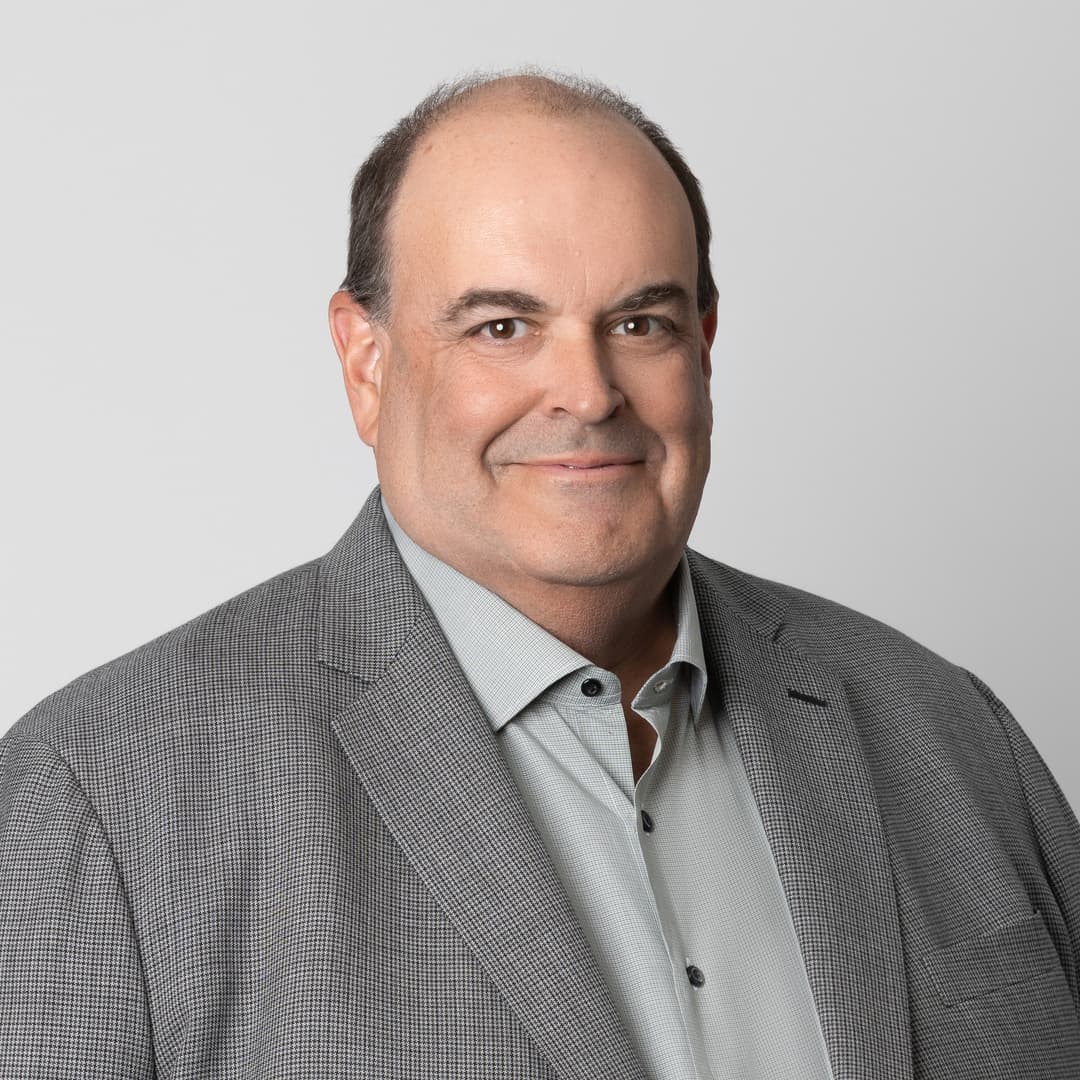
There is a particular kind of executive who measures success not in exits or valuations but in relationships: with customers, with employees, with the work itself. Danny Palo, the CEO of VRC, is that kind of executive. He started at the company in 1985 as a part-time driver straight out of high-school. Forty years later, he runs one of the most quietly formidable information governance companies in the United States. His journey to the top was not a straight line, but it was a deliberate one, and the philosophy he developed along the way has shaped VRC into something genuinely difficult to replicate.
FROM THE DOCKS TO THE CORNER OFFICE
Danny worked his way up through virtually every level of the organization before becoming COO around 2005, and then CEO in 2017. He is disarmingly candid about how the years have felt: "If you enjoy what you're doing, the journey has gone by so fast that it's hard for me to grasp that it's really been 40 years." He is equally candid about the fact that it has not always been easy. "I can't tell you every moment's been sunshine and roses. But there's been a lot more good times and a lot more successes than there have been challenges and failures. A business is like life. You win some and you lose some. And so we win more than we lose."
"I really feel like we're just getting started," Danny says. "Our best years are still in front of us, for sure."
"When it matters, whether a legal matter, a tax matter, a corporate matter, a customer matter, you need your information governance to be organized & managed and available."
That grounded, unsentimental outlook runs through everything VRC does. The company operates across 100 markets nationwide and employs around 2,400 people. It provides services across four segments of information governance, spanning storage and retrieval, secure destruction, release of information and other digital solutions. Competitors exist in each individual segment, but Danny is confident in what makes VRC unusual. "VRC is uniquely positioned that we are a major contributor and provider in all four of these segments. There's really no one else in information governance that touches on a scalable sense each of these four segments."
THE LOCAL ACCOUNTABILITY MODEL
Ask Danny what the most important decision in VRC's history has been and he does not point to a technology investment or a major acquisition. He points to a structural philosophy: local accountability. Every one of VRC's 100 markets has its own customer care team and its own manager. There is no centralized call center, only national scope with local accountability.
"If a customer calls in and says, hey, it sure is raining outside my window, I want it to be raining outside the window of whoever it is they're talking to." It is an old-fashioned idea in an era of efficiency-driven consolidation, and Danny knows it. "It would be disingenuous for me to say that as we get bigger, it is more challenging to make sure you don't lose that local accountability and that service touch." But he holds the line on it nonetheless, because in his view, the model only works if the people on the ground are trusted and empowered to own their markets.
"Our customers don't know Danny or whoever else up here in the corporate office exists or doesn't exist. They're dealing with whomever in the local market they're dealing with."
More for you
The second pillar of VRC's competitive identity is technological independence. The company has controlled its own tech stack from the beginning, and was an early adopter of RFID technology, a decision Danny remembers vividly. "I can remember fighting the Department of Defense and Walmart for very expensive RFID labels in 2005." VRC has been using that technology for over twenty years now and does not charge customers extra for it. It is simply part of how the company's workflows operate.
THE INFORMATION BANK
Danny has a metaphor he uses so often that, by his own admission, his team would roll their eyes if they heard him deploy it again. But it is a good one. "I've always viewed information and records, like money. Doesn't matter if it's digital currency or physical currency. Every organization has money, whether it's a little bit or a lot, and every bank wants you to do what? They want you to deposit that money into their bank and let them manage it and protect it for them. VRC is an information bank and we want organizations to deposit their information at VRC."
It is a useful frame for understanding why information governance tends to be undervalued. Records management rarely appears on the revenue side of a P&L. It shows up as a cost, and costs attract less attention than growth. Danny sees that as both a misunderstanding and an opportunity. "When it matters, whether a legal matter, a tax matter, a corporate matter, a customer matter, you need your information governance to be organized and managed and available." And from a sales perspective, the dynamic gives him unusual confidence. "I know they need the services VRC provides. They may not choose to buy them. But I know they need information management. I've always sort of had the blessing of selling an essential service."
BUILDING THROUGH ACQUISITION
Much of VRC's growth over the last twenty years has come through acquisitions, and Danny has strong views about how to do them well. The company moves quickly on integration. Typically within 60 to 90 days, new acquisitions are operating on VRC's systems and processes. He has watched too many CEOs talk themselves into preserving legacy tech stacks out of caution, only to accumulate what he calls "tech and training debt" that becomes increasingly expensive to unwind.
But the more important part of the acquisition philosophy, he argues, is what to do with the people. "We are effectively buying a customer base. That is the main asset we're buying. But you need a good team to service those customers." VRC actively works to retain talent from acquired companies, and a significant portion of its current workforce, including frontline and senior management, came through acquisitions. The result is continuity for the customer, and the people coming in are already experienced in the industry. "Our goal is not to buy and chop. Our goal is to buy and integrate the top-notch team members into the VRC family."
THE NEXT CHAPTER
VRC has only had a truly national footprint for five or six years, a fact Danny finds energizing rather than sobering. "We've been in business 40 years, but we've really only been coast to coast five or six years. And so we're just in the last number of years starting to really leverage that footprint." The company's current strategic plan calls for doubling the business again within five years, having already doubled it over the preceding four.The ambition is real, but it is not detached from the ground-level reality Danny has always operated in. He describes being just as comfortable on the docks of a VRC warehouse talking with drivers as he is walking into a board meeting. That range, between the operational and the strategic, between the personal and the institutional, feels like the core of what he has built. Not just a business, but a culture. "The relationships are what really matter to me," he says. "I don't even mind the difficult relationships. Part of the challenge is applying those experiences to turn that into something working."For a company that has spent four decades managing other organizations' most sensitive information, VRC has remained notably sure of its own identity. The logo has not changed in forty years. They still call it Bleeding Green. And the CEO still sounds like someone who genuinely cannot imagine being anywhere else."I really feel like we're just getting started," Danny says. "Our best years are still in front of us, for sure."