Goodville Mutual Casualty Company : A Century Of Doing The Right Thing
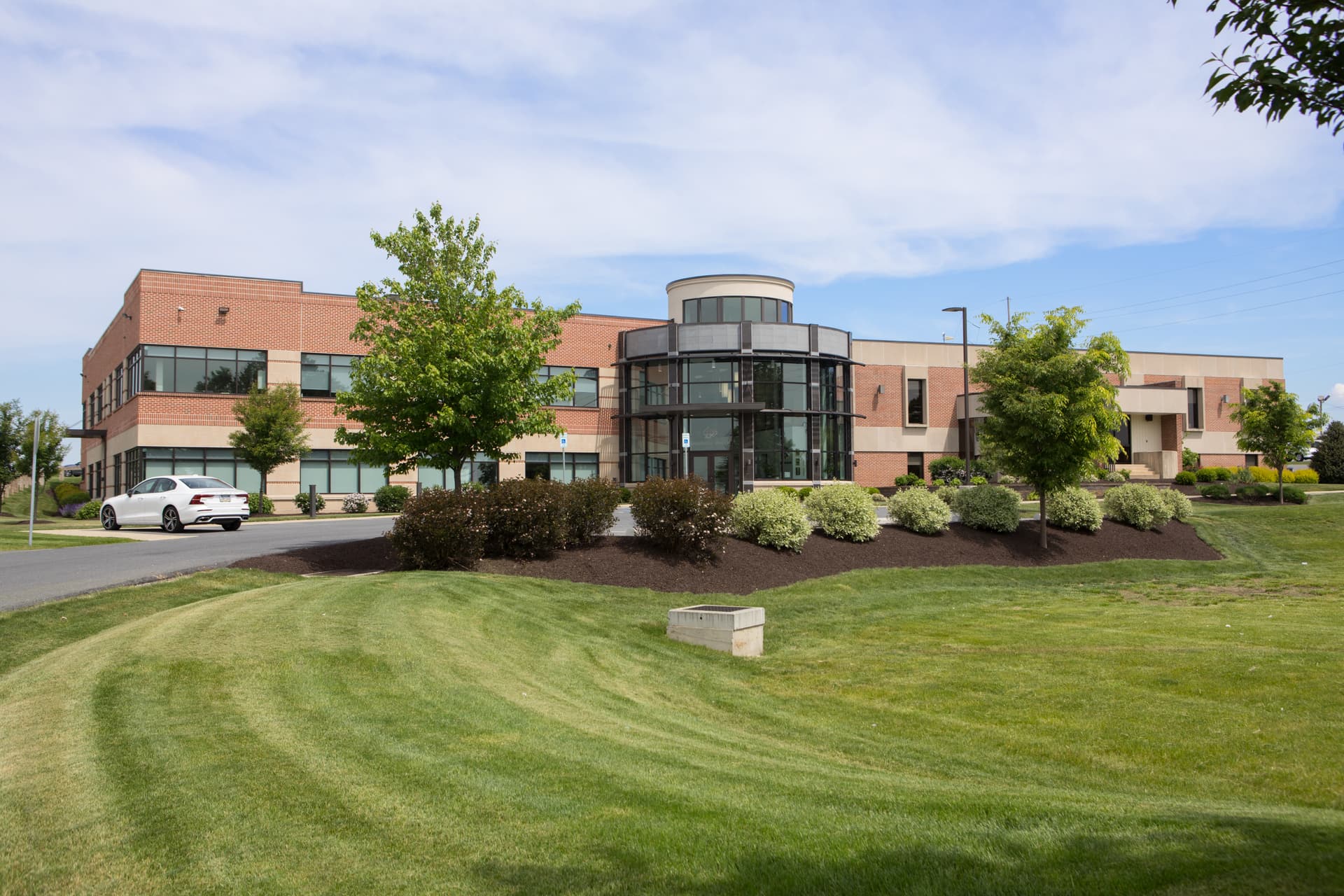
Few companies in the American insurance industry can point to a legacy as enduring as Goodville Mutual Casualty Company. Founded in 1926 in Lancaster County, Pennsylvania, on the Mennonite principle of "bearing one another's burdens," the company has grown from a small community insurer into a multi-state property and casualty carrier operating across nine states with 270 employees. As Goodville celebrates its centennial this year, it also marks a remarkable achievement: earning a place on Ward's Top 50 list of outstanding property and casualty insurance companies for the seventeenth consecutive year.
Sustained success on that scale does not happen by accident. Despite a century of economic shifts, industry disruption, and organizational growth, Goodville has maintained a member retention rate that consistently exceeds 90% while remaining firmly rooted in its founding values. To explore how the company has balanced growth with consistency over the past 100 years, American Executive spoke with David Gautsche, President and CEO; Phil Shirk, Chief Financial Officer; and Vince Zaffiro, Chief Information Officer.
The Weight of a Founding Story
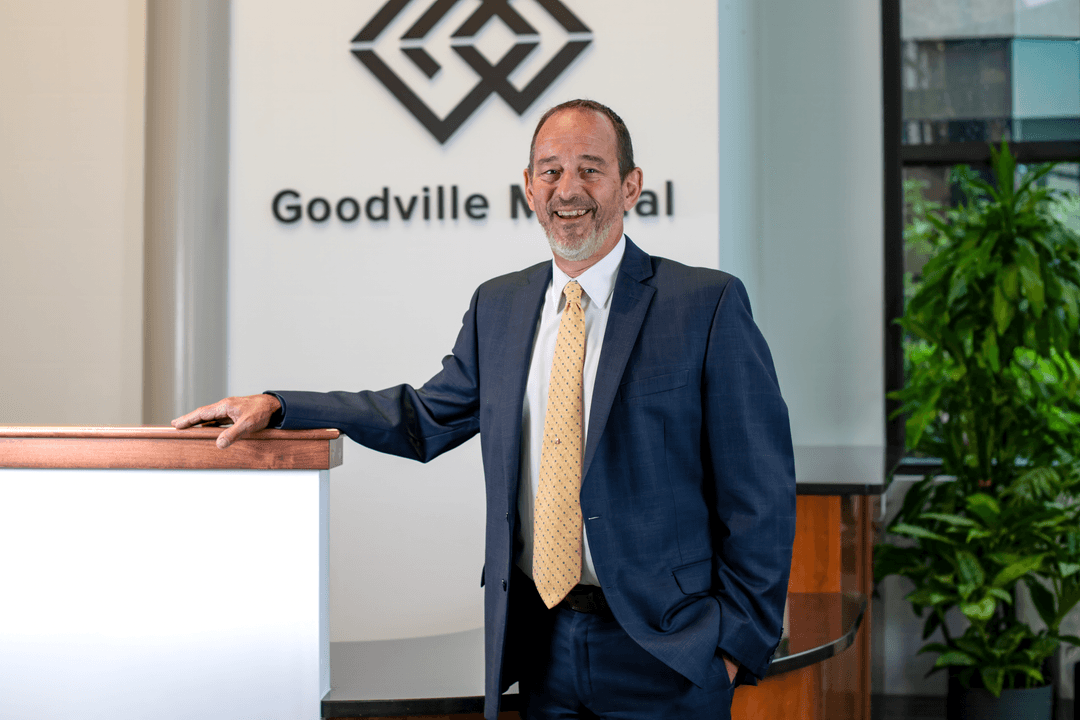
David Gautsche, President and CEO, joined Goodville in 2015, an unconventional hire with no property and casualty background, brought in by a board that was looking for something less common than technical expertise. What they wanted was someone who understood how to integrate values into business decisions. Gautsche, who had previously had leadership roles in faith-based fraternal organization and a family manufacturing firm, understood exactly what they meant.
"Our reason for being is to be here when somebody has a loss," Gautsche explains. "It's not about trying to make as much money as possible. And that changes your decision-making process."
"The mission, purpose, and guiding principles are transcendent," Gautsche explains. "But how we have to live them out and apply them into a changing environment is what we have to work at changing." It is a distinction he returns to often: the foundation does not move, but everything built on top of it must remain responsive to the world around it.
Goodville's founding story is unusually literal in its moral architecture. The company was created to provide liability coverage around the congregational cooperatives of Lancaster County's Mennonite communities, whose members were beginning to drive cars and realized that the risks involved were different from a house fire or a storm. The old model of neighbors gathering to rebuild a barn could not solve an accident on the road. Goodville was the structural answer to that gap, formalizing the informal into something durable.
A century on, the language has shifted but the logic has not. Gautsche prefers to call policyholders "members", not as a marketing decision but as a philosophical one. "When we pay a claim, it's the members paying the claim," he says. "We're just administering the process." The average member persistence rate runs consistently above 90%. In a sector where stock competitors have been known to churn through 20% of their book year on year, that figure speaks for itself.
A Bad Month, Well Spent
Phil Shirk's connection to Goodville goes deeper than tenure. His father served as President of the company in the 1980s, and it was through a dinner with the board of directors, attended while Shirk was still in college, that the connection was forged. He joined as Chief Financial Officer at a time when the company did not yet have one, inheriting an accounting staff and a company that needed to professionalize its financial function without losing what made it distinctive.
His philosophy, shaped by decades in the chair, is built on a particular kind of discipline: conservative investment strategy, careful expense management, long-term thinking over short-term gains. "We don't chase after short-term profits that might cause long-term pain," he says simply. This approach has allowed Goodville to maintain its AM Best A Excellent rating while peers subjected their books to more volatile strategies.
The mutual model, Shirk is clear, changes the nature of every major decision. "Our reason for being is to be here when somebody has a loss," he explains. "It's not about trying to make as much money as possible. And that changes your decision-making process." There are no shareholders demanding a return horizon of five to seven years. There is only the obligation to exist, and to exist well, for the people in the pool.
One anecdote, recounted independently by both Shirk and CIO Vincent Zaffiro, captures this ethos with unusual clarity. Following a month in which the company paid out heavily to members in need, Shirk's financial communication to staff reframed the loss as something else entirely: a statement about how many members the company had been able to help. Zaffiro recalls reading it and thinking: "Wow. We lost money last month." But that was not the story being told. In a stock company, the story would have been about the bottom line. Here, it was about the people.
The Modernization Problem
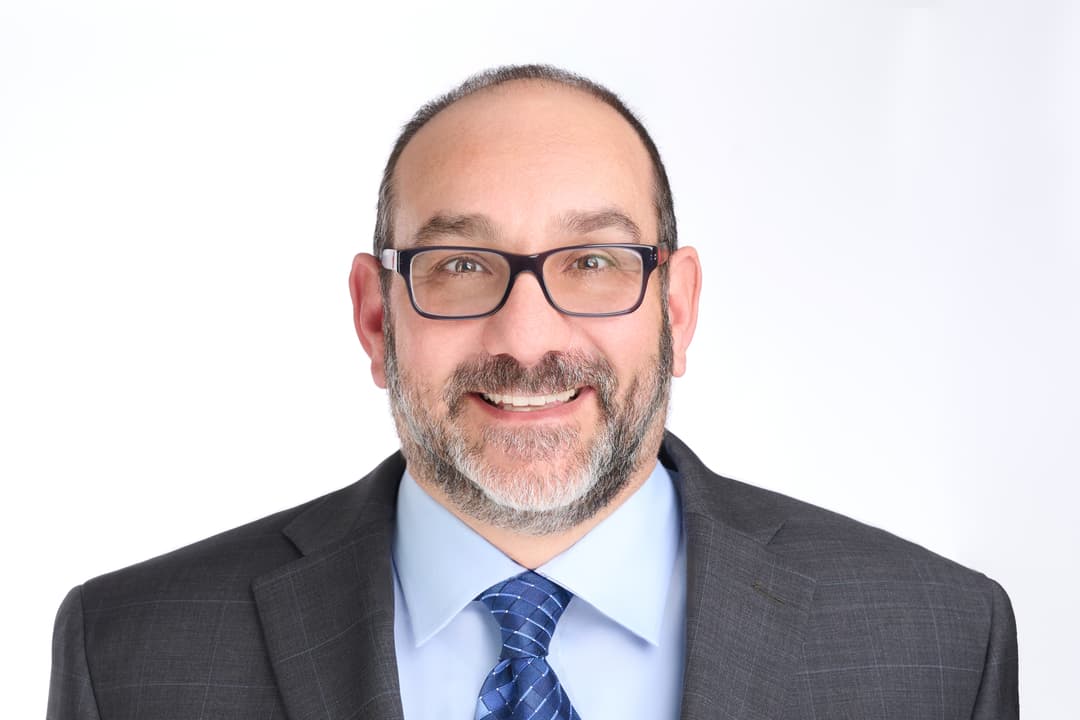
Vincent Zaffiro arrived at Goodville in September 2020, in the depths of the COVID pandemic, with a background in enterprise architecture and a stated goal that might have raised eyebrows at other companies: he wanted to work himself out of a job.
"With cloud and AI, a lot of technology is moving into the business," Zaffiro explains. "I think the CIO role is going to change and morph over time." The days of IT as a centralized function controlled by one department, he believes, are numbered. What replaces it is something closer to a data officer role, empowering the business to use technology rather than managing it on their behalf.
The practical challenge of modernizing a company with nearly a century of institutional habit proved to be as much a human problem as a technical one. Zaffiro found staff with 25 and 30 years of tenure, people whose muscle memory was wired to legacy systems and who knew every shortcut and workaround in tools they had used for decades. Replacing those systems, he found, felt to them like starting a new job.
"I've always known you should over-communicate," he says, "but I've never really understood that until I came to Goodville." The company's culture, in which employees are genuinely unafraid to challenge decisions and demand the reasoning behind them, forced Zaffiro to develop something most technology leaders never fully acquire: the habit of explaining the why.
On the technical side, the transformation has been substantial. Goodville's pivot in 2024 from a traditional data warehouse to a data lakehouse architecture, built on Microsoft Fabric within the Azure ecosystem, went live in 2025 after years of struggling to consolidate data that had accumulated across the company in AS/400 systems, Excel spreadsheets, Access databases, and SQL servers. Where the old approach required defining data structure at the point of entry, the lakehouse model defines it at the point of consumption, making the organization far more agile in responding to business needs it cannot yet anticipate.
"You told me five years ago AI was going to be what it is, I'd tell you you're crazy," Zaffiro says. The infrastructure now in place, he argues, positions Goodville to absorb whatever comes next, including AI capabilities that do not yet exist.
Hearing from Goodville's Interns
JOEL LAPP — Actuarial Analyst I, 2023 Intern Graduate In regards to the rotational aspect of our program where they spend 1 week in each department:
"I was hesitant to apply for a rotational internship rather than a traditional actuarial internship. Looking back, I appreciate the opportunity that I had to learn and work in every department. As an actuary, a significant part of my role spans across all departments. Rather than setting me back, the rotational piece of the internship actually put me ahead."
More for you
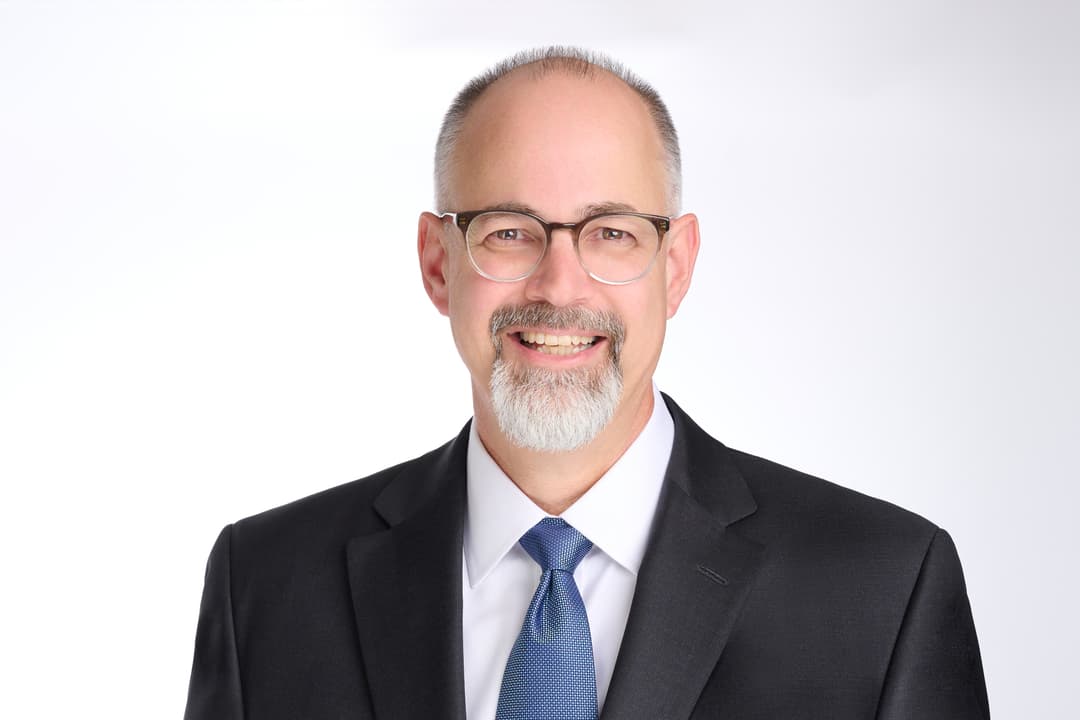
JOSH GROFF — Assistant Underwriter I, 2023 Intern Graduate
"Before I became an intern at Goodville, I was unsure of the direction that I wanted to go in my career. I did not think I would work in insurance, and I saw the internship opportunity at Goodville as a way to satisfy a college credit, and nothing more. After spending the summer months between my Junior and Senior year of college at Goodville, I knew that it was the place for me."
BROOKLYN HAMBRICK — Associate Business Intelligence Analyst I, 2025 Intern Graduate
"The Goodville Internship Program helped me enter the insurance industry by giving me the necessary exposure to each part of the business. Being able to sit and learn from every department gave me a well-rounded understanding of insurance. It was also great to see just how many career paths there are in the industry."
"Before the internship, I did not have much interest in working in the industry, mainly because I had a limited understanding of how insurance companies operated. However, the program changed my view by showing me how dynamic and engaging insurance really is. There is a wide range of work that is constantly changing, which makes it more interesting than I originally expected."
"The rotational piece of the internship was probably the most valuable aspect of the program. Getting to sit with each department helped me understand how each team operates both individually and cross-functionally. This exposure then guided my decision to work on the Reporting and Analytics team and gave me foundational insurance knowledge that continues to help me in my work today."
ELLIE HOLLINGER — Robotic Process Automation Analyst I, Intern Graduate 2025
How did the Goodville University Internship Program help you enter the industry of insurance?
"I had no knowledge of or interest in the insurance field before this program. But I was attracted to companies that cared about and invested in their people. Goodville had that, so I figured, why not learn something about insurance along the way?"
Talk about how the rotational piece of the internship program gave you a large exposure to the many facets of the insurance industry and Goodville itself.
"Just out of college with no specific career path in mind, I loved being able to learn about each department and Goodville as a whole before committing to a job. The rotation lets you see how all the pieces fit together, so when you choose an area, you actually understand how the business works."
Growing Without Losing the Thread
The numbers tell one story about Goodville's growth. When Gautsche arrived in 2015, the company had around 70 employees across a single location. Today there are 270 employees across three offices in Pennsylvania, Ohio, and South Dakota. The cultural challenge that growth creates is one he speaks about with candor.
"When you have a very stable workforce that's not growing, you develop a very cohesive, tight group of people who all know each other really well," he acknowledges. "That's a much easier environment to maintain culture." His response has been structural and personal in equal measures: monthly coffee groups, regular sessions with every new hire in their first month, town halls, a Next Level Leaders program that builds supervisory capacity below the VP tier and creates genuine succession pathways.
Goodville University, launched from the lessons of the pandemic, formalized this commitment. The platform gives every employee full visibility into every career path in the organization, including compensation bands and the skills required to get there, and pairs that transparency with dedicated organizational development support. A five-year internship program has consistently converted its participants into permanent hires. The most recent addition to Goodville University: a class on how to use AI in ways that align with the organization's values.
It is a detail that would not be out of place in a technology company's training catalogue. But it fits at Goodville because of what surrounds it. When Zaffiro presented his AI strategy to the board, he was explicit about what it was and was not: the company was building an intelligence layer between software and people, not a replacement for them. "Our competitive advantage is the people," he says. "So, we're never going to talk about how we want to automate someone."
The Second Century
At the end of each interview, the same question was posed to all three executives: on a daily basis, what is their favorite thing about working at Goodville? Gautsche spoke about the people and the relationships built across the company and the industry. Zaffiro, who recalled his own answer to a bonus question about the company's defining asset, pointed to the same thing David Gautsche had predicted: the people. Shirk, for his part, spoke about the discipline of a company that knows why it exists.
The Ward's Top 50 designation, Gautsche notes, rewards exactly what Goodville has always practiced: long-term underwriting discipline, consistent growth, multi-year performance. "There's a natural intersection between our approach to the business and the way they measure success," he says. "Which is a longer-term view of the world."
One hundred years ago, a group of Mennonite communities in Lancaster County decided that the best way to manage a new kind of risk was to do what they had always done: stand together, bear the burden, and trust that the arrangement would hold. The formalities have changed beyond recognition. The logic has not. As Goodville Mutual steps into its second century, the question its leadership is asking is not whether those values will survive growth and technology and a rapidly changing world. It is how to ensure that the growth, the technology, and the world are shaped by them.