XGS At 40: How A Specialist Carrier Is Building Its Next Growth Engine
When Greg Laminack talks about Xpress Global Systems, he does so with the perspective of someone who has lived through almost every version of the company.
Laminack, now president of XGS, has spent 21 years with the business and roughly four decades in transportation. He has seen XGS operate under the security of a billion-dollar truckload parent, endure a turbulent period of private-equity ownership, navigate the sudden collapse in flooring volumes during Covid, absorb competitors and rebuild its technology infrastructure.
Through it all, he says, the company developed a habit of finding a way to “live to fight another day.”
““What you see today is the worst technology that you’re ever going to see.” - Daniel Millbank, CTO, XGS.”
Devin Dean represents the other side of the equation: not continuity, but acceleration.
Dean acquired what became Little River Transportation in 2019 and has since assembled LRT Group into seven operating entities spanning refrigerated and dry-van truckload, LTL, brokerage, leasing and other transportation businesses. He says the group has doubled every year since 2019 and is currently running at roughly $410 million in annual revenue. His next target is considerably larger: $1 billion by the end of 2027.
When LRT acquired XGS in November 2025, Dean was attracted by something that would take years to replicate from scratch: a nationwide physical network.
The network, he says, gives LRT the infrastructure to expand its general-commodity LTL offering far faster than if it were starting from zero. XGS already had the buildings, terminals and operating footprint in place. Dean described the effect as putting more fuel behind an existing growth engine.
He also quickly identified Laminack as the executive he wanted leading XGS. Laminack knew the business in detail, Dean says, and had the confidence of the people around him.
LRT may make mistakes like any growing company, but on that appointment Dean is unequivocal: “We got that one right.”
Now, as XGS marks its 40th anniversary, those two perspectives—Laminack’s institutional memory and Dean’s appetite for expansion—are shaping the company’s next chapter.
Dean has given XGS a five-year revenue target of $500 million. To get there, the company plans to broaden its freight mix, expand geographically, leverage existing terminals more aggressively, pursue selective acquisitions and potentially double its workforce.
It is an aggressive target. But XGS is starting with an unusual competitive position.
From Flooring Specialist To Broader LTL Player
For much of its history, XGS has occupied a niche that many larger carriers would prefer to avoid.
Flooring freight is awkward. Rolls of carpet and artificial turf can stretch 12 or 15 feet and require specialized handling equipment. Instead of neat pallets moved with conventional forklift forks, XGS employees may need carpet poles and processes designed around long, bulky and easily damaged products.
Laminack argues that specialization has become a moat.
Many general-commodity LTL carriers simply do not want the freight. XGS, by contrast, has spent decades learning how to handle it efficiently. Laminack says the company’s claims ratio is below 0.5%, despite the difficulty of the commodities it transports.
That flooring expertise is not going away. What is changing is the ambition around it.
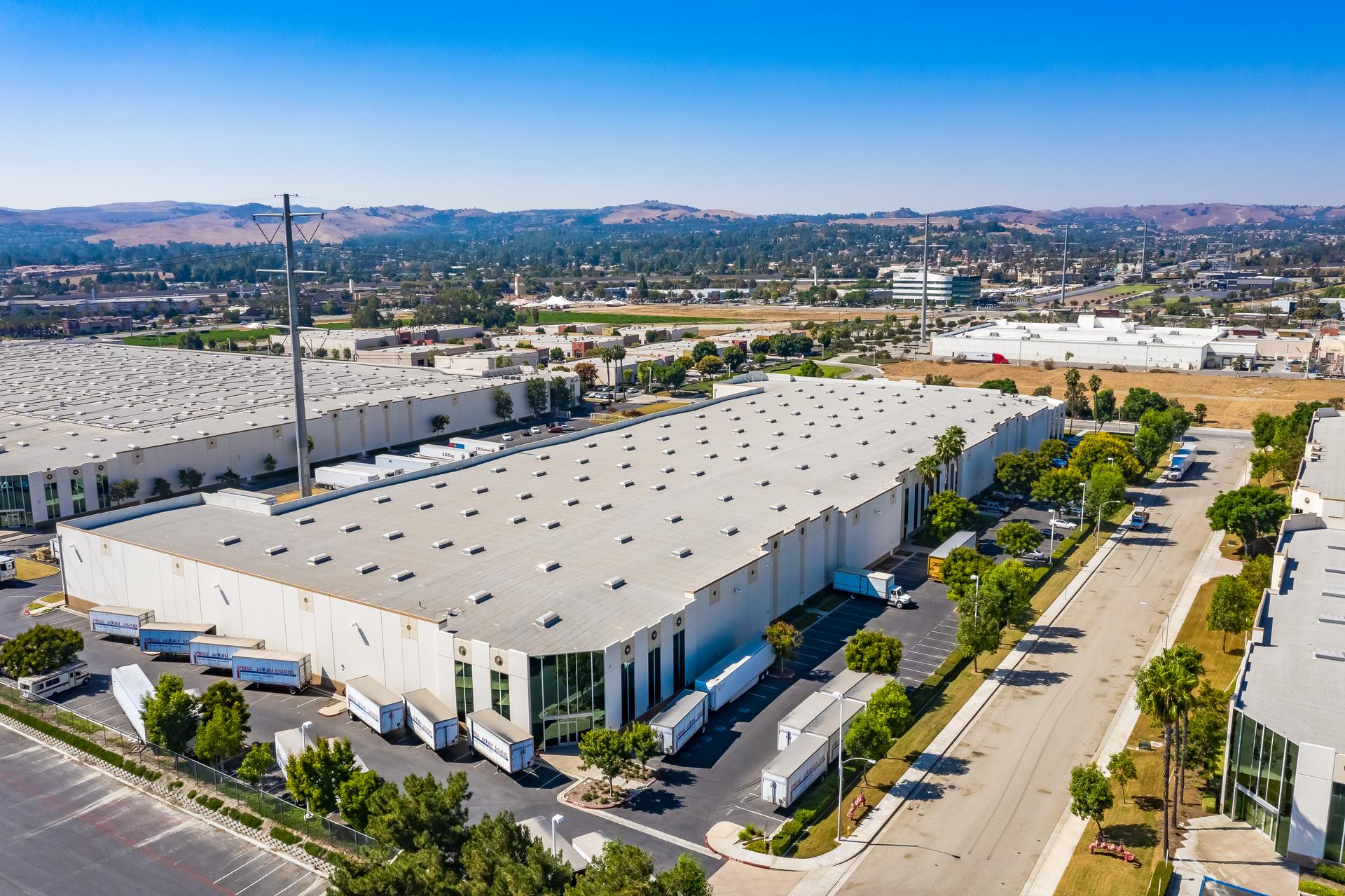
XGS currently operates about 45 locations, and Laminack describes it as the only nationwide carrier focused on floor covering at this scale. The next phase involves extending that network into more general-commodity LTL freight, reducing dependence on historically one-way flooring distribution and creating more balanced freight flows.
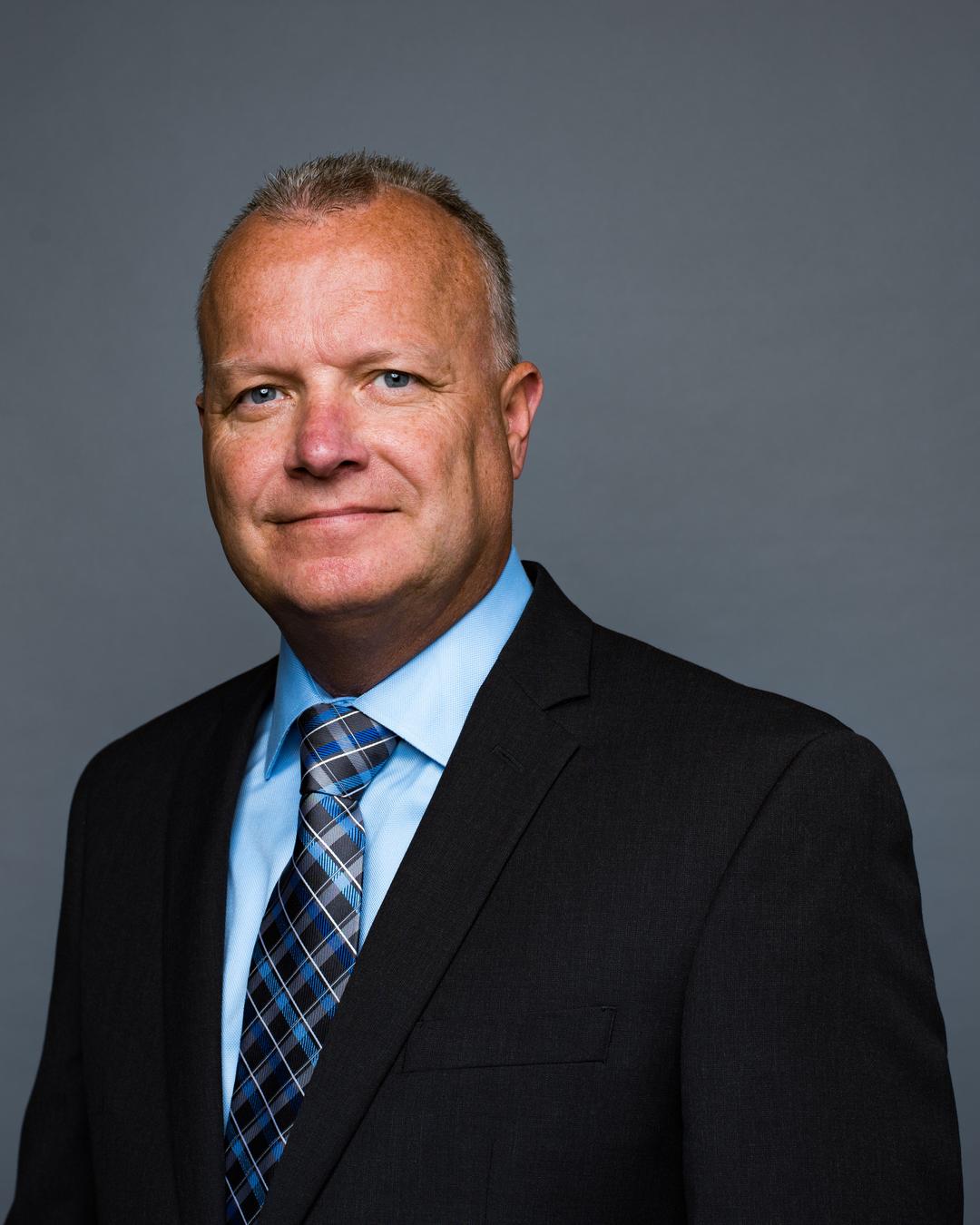
Trey Kenemer, vice president of enterprise sales, describes the commercial objective in visual terms. XGS does not want its annual business profile to resemble a bell curve, rising and falling with seasonal flooring demand. By adding freight categories with complementary business cycles, the goal is to flatten that curve—and then continue raising the line.
Kenemer says that expansion is accompanied by a “militaristic focus on the customer experience.” Greater network density, in his view, should not merely generate additional revenue. It should also improve service for the customers already using the network.
Dean sees another form of leverage. XGS already has buildings and staff in markets across the country. LRT can use those terminals as launch points for other group businesses.
“We’ve already got staff in those cities,” Dean says. The infrastructure gives LRT a way to establish additional operations without recreating the physical network market by market.
Rebuilding The Technology Beneath The Freight
If Dean’s strategy depends on putting significantly more activity through the network, Daniel Millbank’s job is to make sure the systems beneath it can scale.
When Millbank joined XGS in 2019, he encountered fragmented technology, multiple sources of truth and legacy software that turned routine work into complicated processes. IT had historically been treated like a utility: keep the systems running, issue laptops and make sure employees could connect.
Millbank wanted to change the premise entirely.
“Our job is to help XGS run better,” he says.
His other formulation is even sharper: “I’m not paid to add technology. I’m paid to remove complexity.”
The difference can be measured in systems onboarding. Under XGS’s old technology environment, Millbank says it could take an employee roughly six months to become proficient on the company’s systems. Today, that systems learning curve has been cut to about a week.
At the center of that transformation is One XGS, a platform built to give employees a single environment for the information required to move freight. Instead of navigating several disconnected systems, spreadsheets, emails and hard-to-access data, employees increasingly work from one shared source of truth.
The complexity behind the screen, however, remains substantial.
More for you
A carpet roll cannot simply be treated as a pallet turned sideways. XGS may warehouse a large “parent” roll, cut it into smaller “child” rolls, track each individually, maintain inventory and manage fulfillment. Different customers also have their own contracts, tariffs and billing exceptions.
Millbank recalls the company’s CEO summing up the old environment when he joined: “Right now at XGS, you need a PhD to move a carpet from A to B.”
Millbank’s technology strategy has effectively been about making sure that is no longer the case.
Artificial intelligence is increasingly part of that effort. Millbank says XGS has used AI to identify potential revenue leakage by examining datasets at a breadth that would be difficult for an individual or small team to replicate.
The larger ambition is to make XGS a “learning logistics company”—one that captures what happens operationally and makes that knowledge reusable.
If a driver discovers that a delivery location lacks a dock, requires a lift gate or presents some other constraint, that information should not remain in one employee’s memory or on a Post-it note. It should become institutional knowledge available across the network.
Millbank is also wary of the idea that AI’s primary purpose should be eliminating people.
“People care, systems don’t care,” he says. His view is that companies combining capable employees with better technology will ultimately outperform those that simply reduce headcount and automate whatever remains.
And the technology will not stand still.
“What you see today is the worst technology that you’re ever going to see,” Millbank says, reflecting the speed at which AI and automation are evolving.
Building A Bigger Company Without Losing The Old One
That same emphasis on people runs through XGS’s growth strategy.
The company has roughly 775 to 800 employees today. Laminack believes achieving its growth objectives could eventually require around 1,500 to 1,600.
Kevin Holland, vice president of human resources, is preparing for that expansion by strengthening talent acquisition, reassessing compensation across different labor markets and using technology to accelerate recruiting. But hiring capacity is only part of the challenge.
The harder question is whether XGS can double in size while preserving the relationships and culture that helped it survive the previous 40 years.
“I don’t want to lose any of that identity,” Holland says. He wants XGS to retain the accessibility and employee connection that can disappear as organizations become larger and more geographically dispersed.
Kenemer sees thoughtful frontline recruitment as one answer. Recruit well at entry level, invest in development and the business creates what he calls a “farm league” for future leadership.
His own career is evidence that the model can work.
Kenemer arrived at XGS nearly 16 years ago with little transportation experience after studying biology, working in ecological research and later earning an MBA. He became known for repeatedly walking from his workstation to Laminack’s office because he wanted to understand how the network worked.
Laminack says Kenemer “wanted to understand the nuts and bolts” of the business, including where failures could occur and how those failures could be prevented. Over time he moved through expedited freight, brokerage, transportation and commercial roles before becoming vice president of enterprise sales.
That internal-development story matters because XGS is trying to grow quickly without becoming anonymous.
During one of the company’s more difficult private-equity periods, Laminack says employees asked him why he had stayed when other executives had left.
His answer was the employees themselves.
“I didn’t want them to think that I abandoned them,” Laminack says. He wanted to remain, protect the people around him as best he could and see the company through the difficult period. His longer-term goal is to leave a meaningful legacy at XGS and, in his words, leave the business better than he found it.
Dean expresses the principle through his faith. He says LRT is built around honesty, integrity and accountability, and that opportunities inevitably arise to make decisions that may appear to accelerate growth but are not necessarily the right ones.
His experience, he says, has been the opposite of the expected trade-off.
“We just kept doing the right thing every day.”
Over time, Dean believes that consistency has helped rather than hindered the company’s growth.
At 40, that may be XGS’s central challenge.
The business is moving from a specialist flooring carrier toward a broader national LTL platform; from roughly 800 employees toward potentially twice that number; from fragmented legacy technology toward a data-driven operating system; and toward Dean’s $500 million revenue target.
Kenemer believes XGS has one advantage as it does so: it is large enough to have meaningful resources, but still flexible enough to build solutions around individual customers rather than simply selling a standardized service.
Forty years gave XGS the network, expertise and institutional memory.
Its fifth decade will test whether those foundations can support something much bigger.